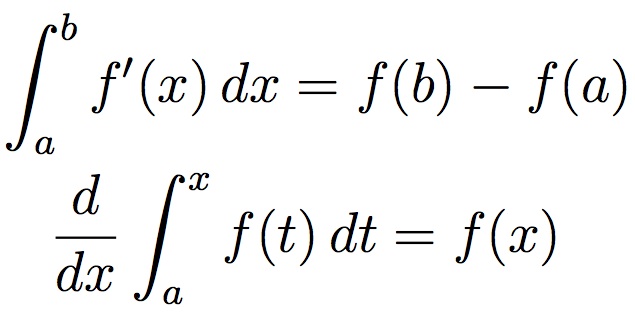
It all starts from the leap jump accomplished by calculus in the attempt to calculate irregular shape. It does’t take super smartness to go about by dividing the shape into infinitesimal small pieces, then sum up. But the sum-up is at most an approximation, not a finite, accurate value, what makes it accurate?
That leap from approximation to an accurate value is through the concept of differential/integral and empirical summarization of numerous functions of such. for example the differentiation solution for function -f(X^2) is 2x.
Sal has a rigorous mathematical proving video (need to dig out).
two-dimensional scenario too:
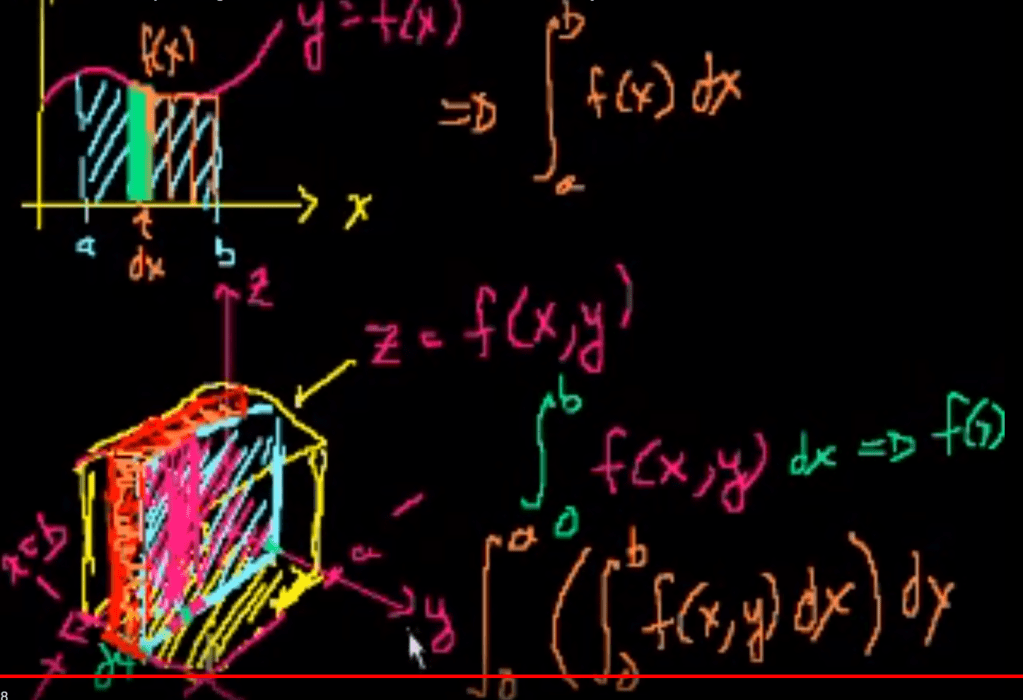
Logically straightforward, one could infer it also holds in three-dimensional calculation. The question is what’s the scalar field based on this three-dimensional object. It’s hard to perceive as we live in a three-dimensional world. However, there are concrete use cases, such as density. Density is depended on x, y and z, so to calculate the mass of an object, triple integral can be applied.
Now the fun part, about how to do the integral calculation of three-dimensional surface, starting with the classical torus.
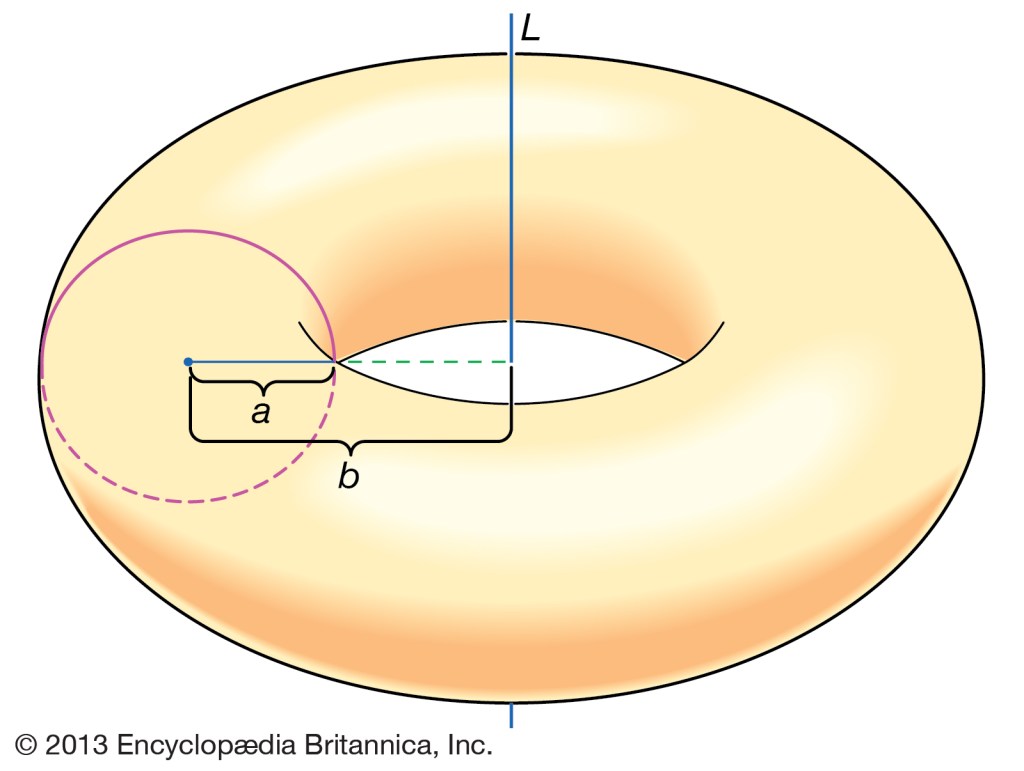
In math language, two parameters s and t are needed to define:
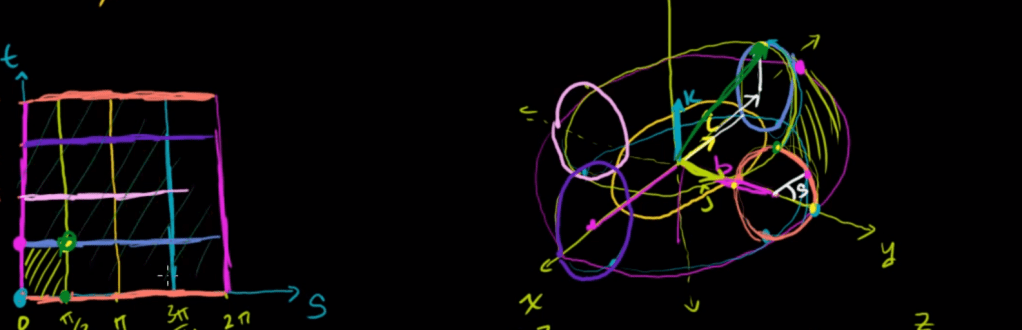
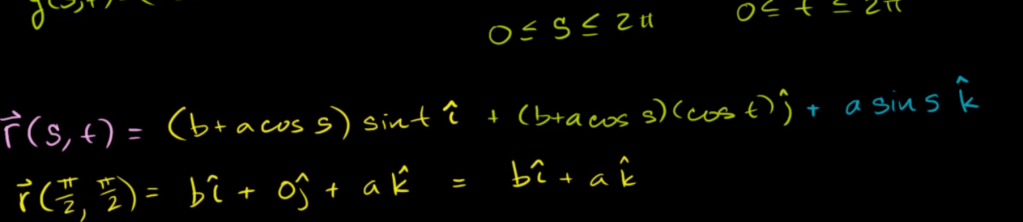
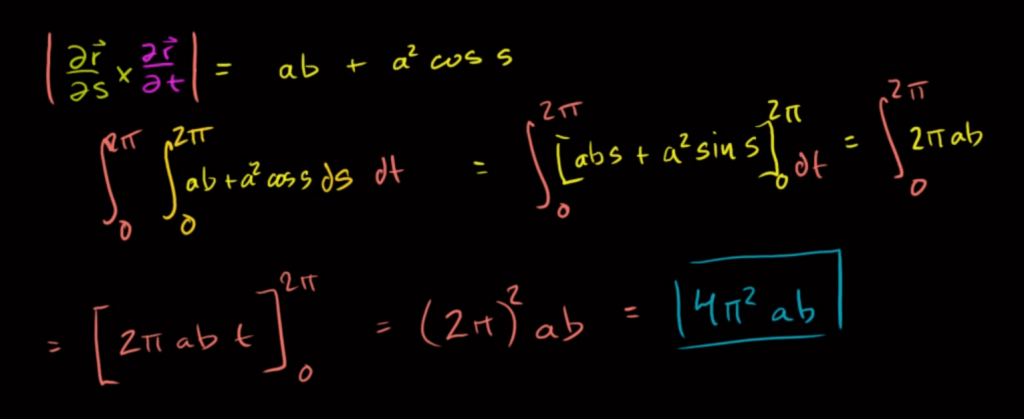
There complicated steps in middle to do the integral of torus, the fina result is neat as
In physics, work done by a vector force through a path, closed or open, is often needed to calculate. It is so called vector line to scalar field integration:
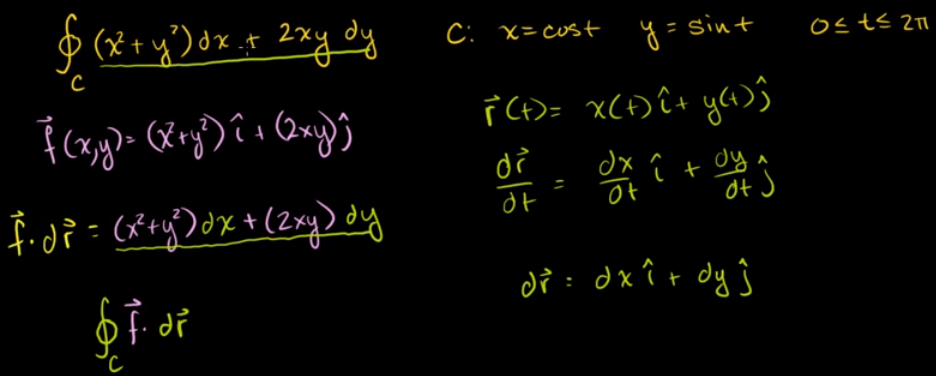
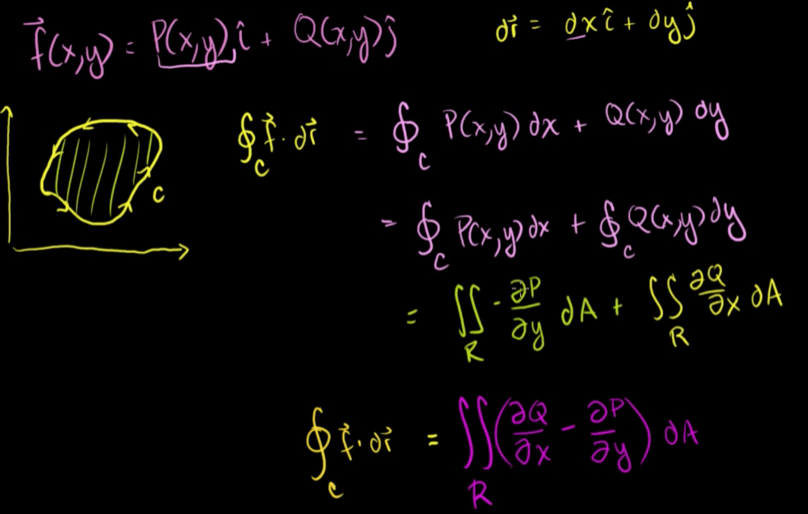
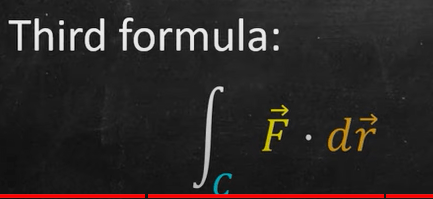
Moreover, it’s important to know both forms in explict dr.fvector and without explicit dr.
(to be continued)
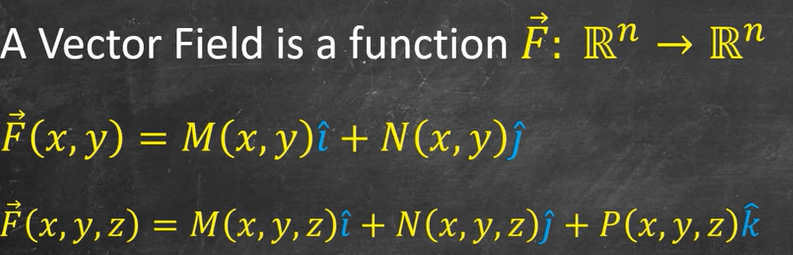
What is vector field, according to Dr. Trefor Bazzet, it is a function mapping Rn to Rn:
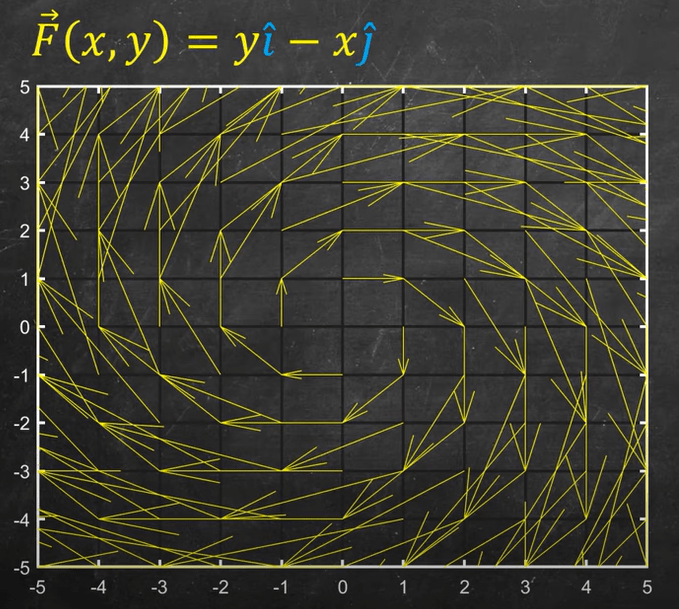
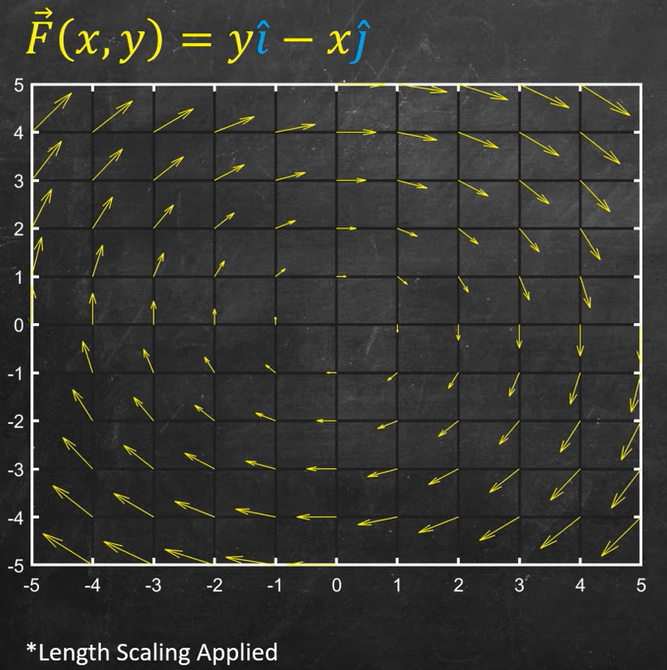
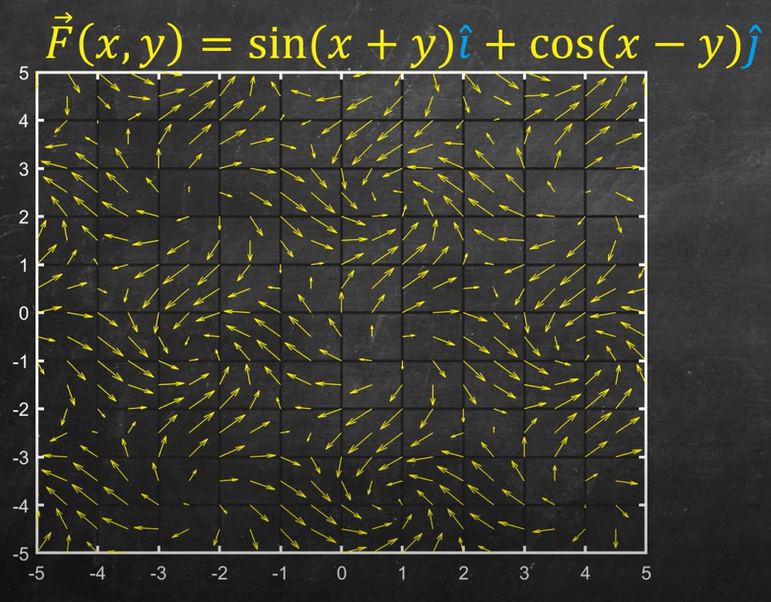
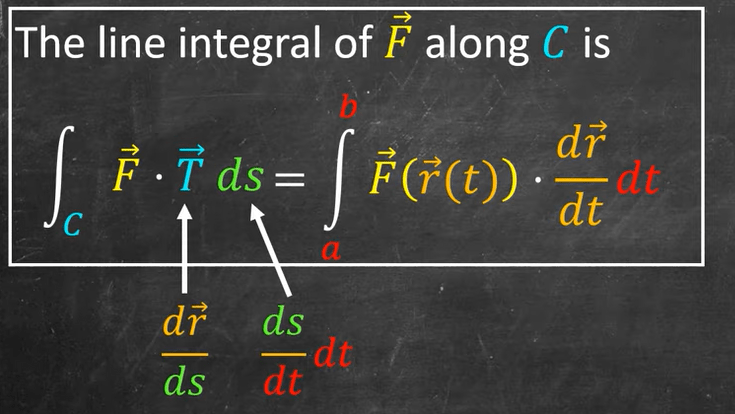
To do a line integral along the curve and suppose try to calculate the work that has been done on the tangential direciton, we have
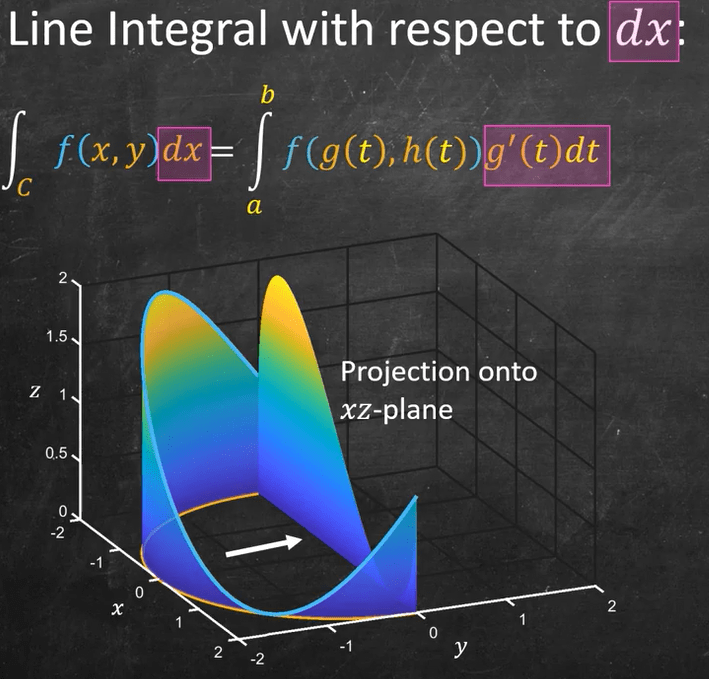
What if you only want to do the line integral on x or y axis?
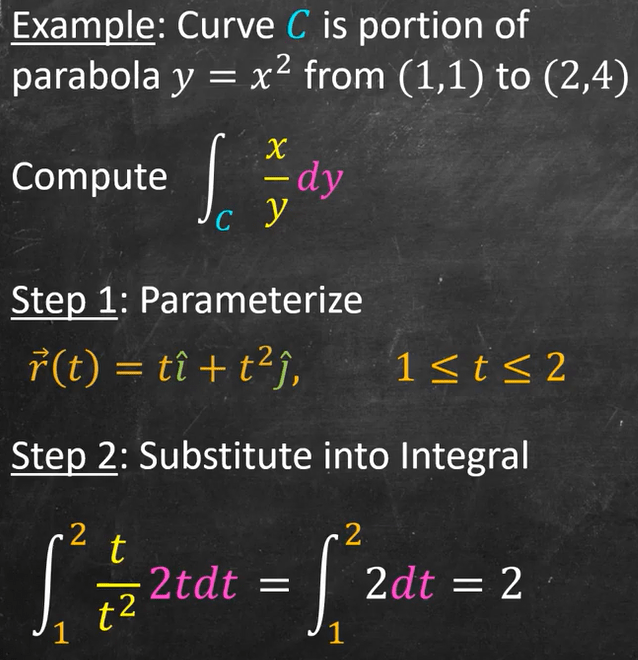
Then to make the case a little bit more complex, let’s take a look at this:
WE heard a lot that a vector field is conservative, what does that mean? A field F is conservative on an open domain if the integral of F dot dr on the domain of circle C is the same for ALL paths C between points A and B in the domain.
how to prove a vector field F is conservative or not, use the simple example below
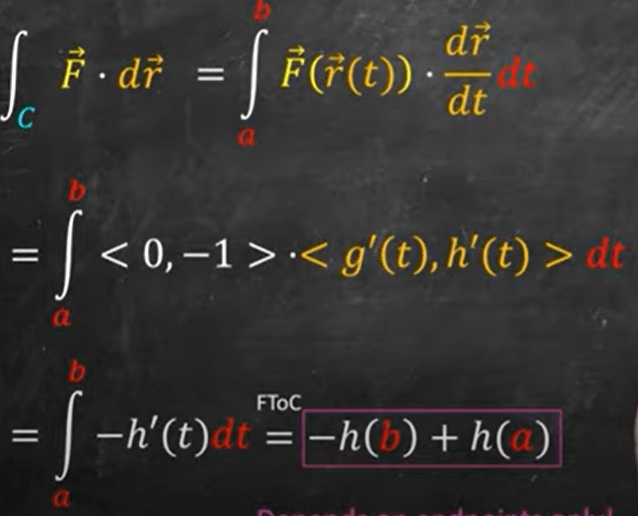
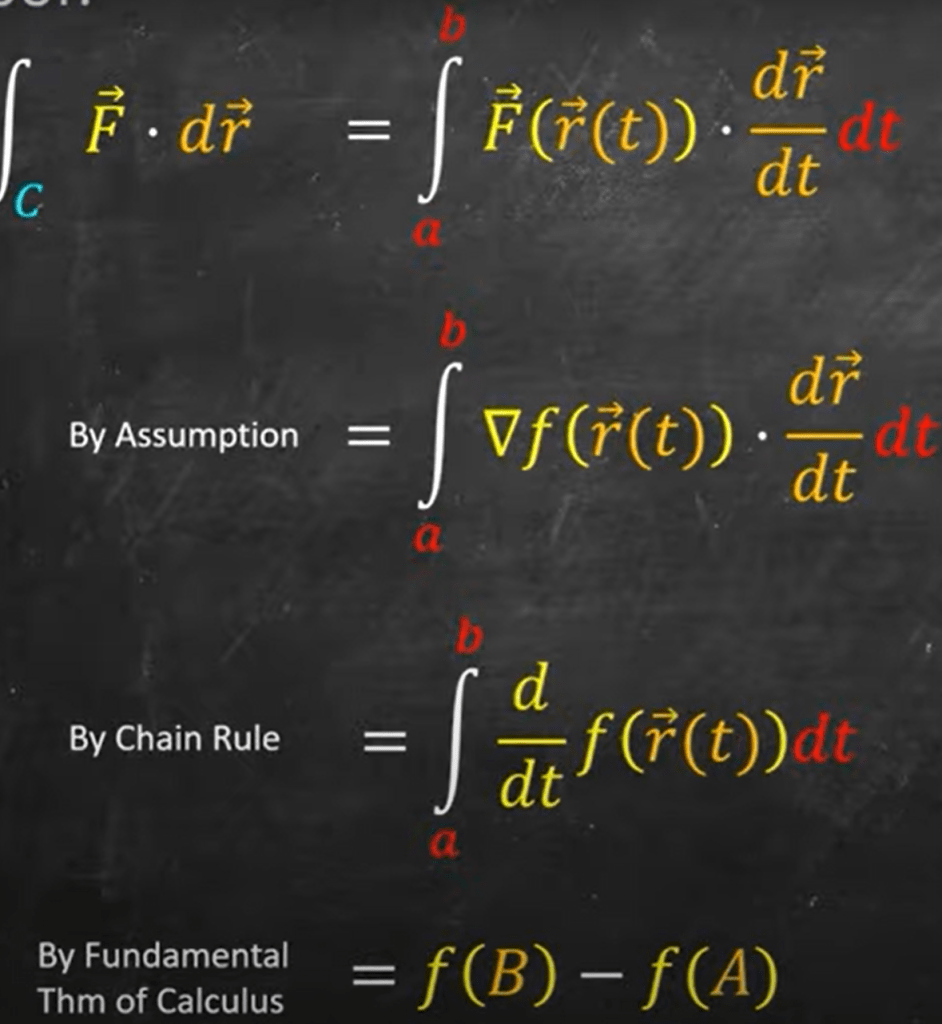
When is a vector field conservative? When it is like in the fundamental derivative theorem, so f(x)’ has to be a continuous derivative. Hence, the vector field F should take the same essence as the continuously differentiable function f(x), a gradient.
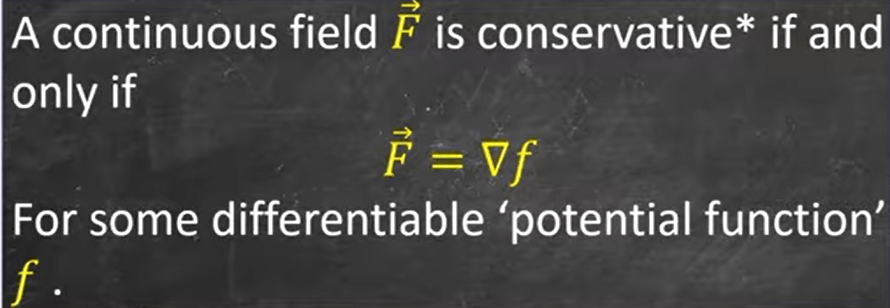
To be able to quickly tell if a vector field is conservative or not, there is a clever way
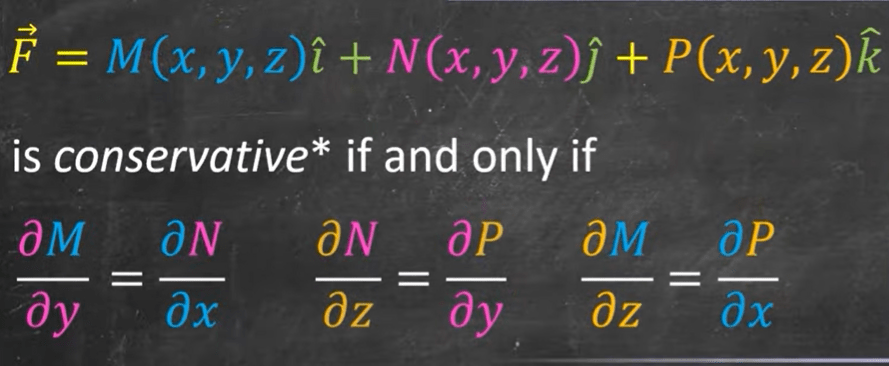
Why? Suppose F is identical to gradient
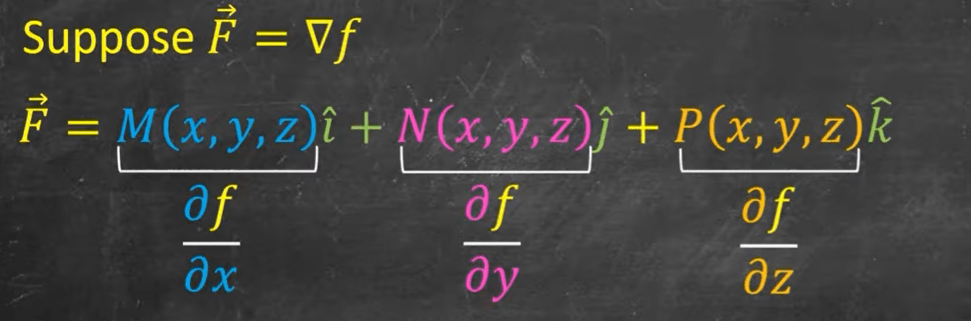
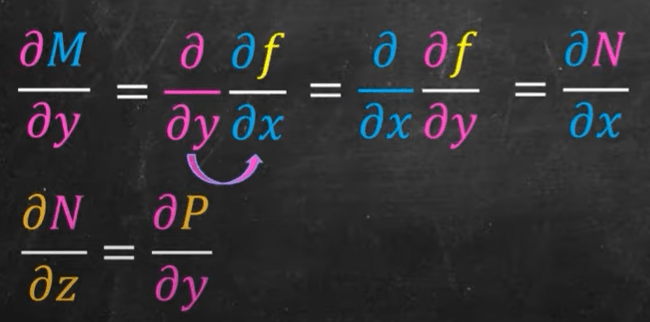
Now look into a real example, knowing the vector field F, how to deduce the gradient f?

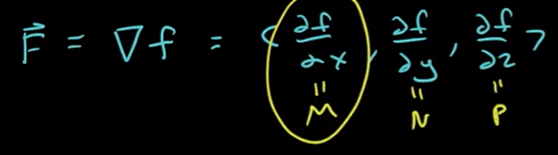
Then just to apply some manipulations

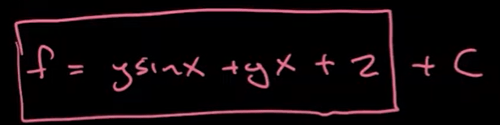
Further, knowing this vector field F, try to do line integral
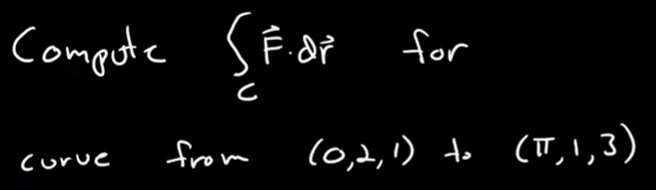
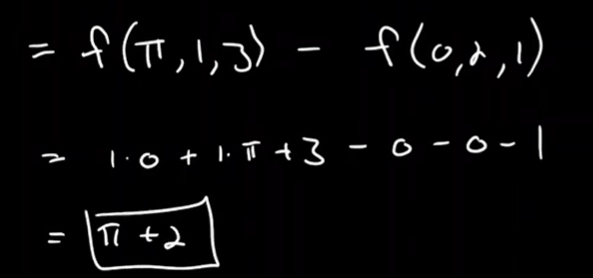
Note to compare the difference between length integral and vector to vector integral. For example in below question

this is a typical problem of length integral of ds, ds can be expressed by square root of vector components’ squared.
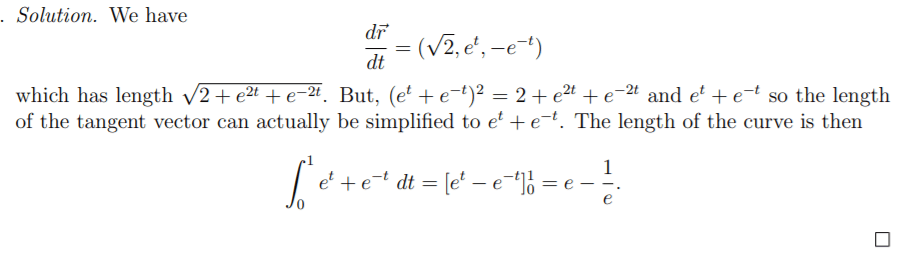
Line integral of a scalar field

Line integral of a vector field

A conceptual problem:

Solution is to introduce normal vector and do dot product, clever:

a conservative vector field is a “well-behaved” force where energy isn’t lost to the path—like climbing a mountain where every step’s effort is stored as potential energy.
 Naixian Zhang