It’s been iterated multiple times of what cross product is and how useful it is in math and physics. But Prof.Shifrin’s version is still quite mind-blowing.
He starts from the determinant formula for an R3 matrix:
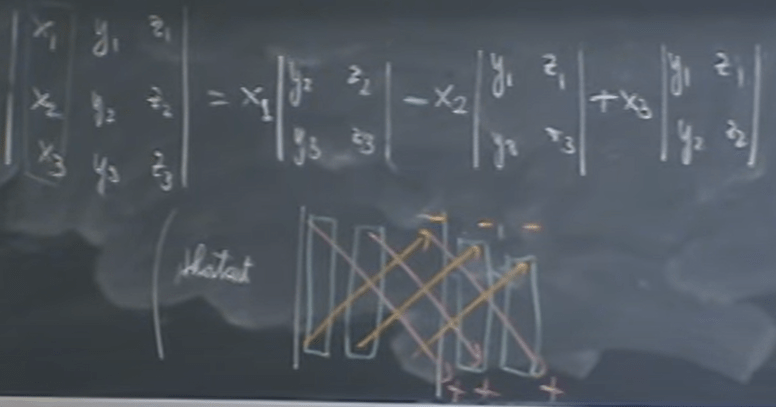
Then he switched to discuss the properties of determinant of R3 matrix

And give the definition of cross product of two vector u, v living in R3 as

Using a real example, we found a vector u dot the cross product of u and v gets zero, does it hold always?


Based on this definition, we wonder what is the direction/sign of cross product and what is the magnitude? This is the best part of prof. Shifrin’s lecture on this topic!
Here is his deducting process:

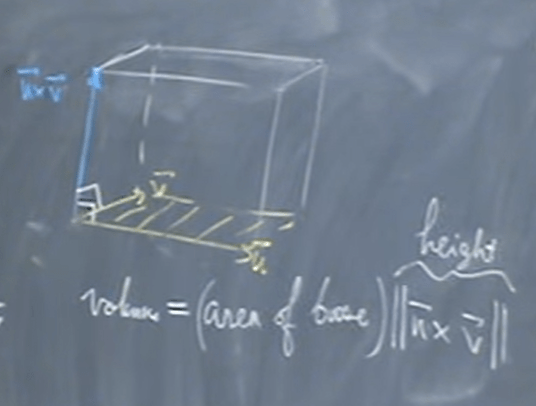
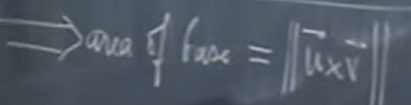
Hence we get the magnitude of u cross v is the area of the base
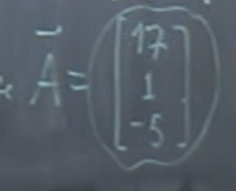
Grasping this concept help think differently and quickly on solving math problems. For example, given V spanning the two vectors given below, we’d express in below form of V plane leveraging the orthogonal vector A.

A is simple the cross product of the two vectors:

“Determinant” is a very profound concept in math. There are multiple ways to understand. One is above, adding another one from Keena Crane at CMU on teaching computer graphics:
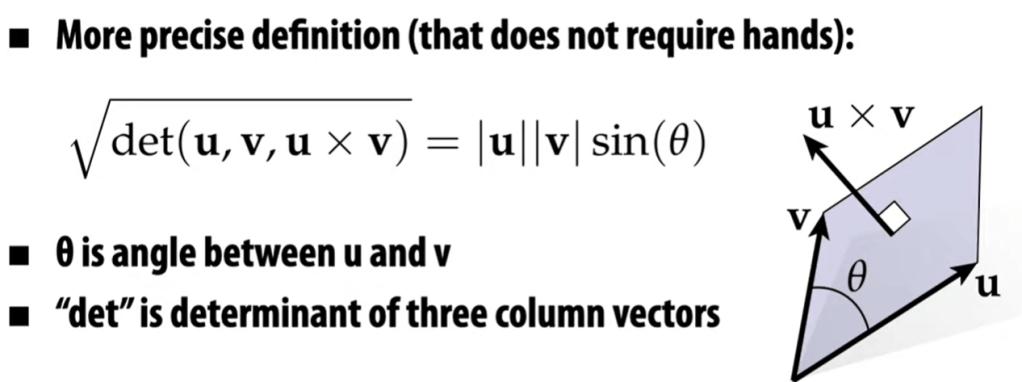
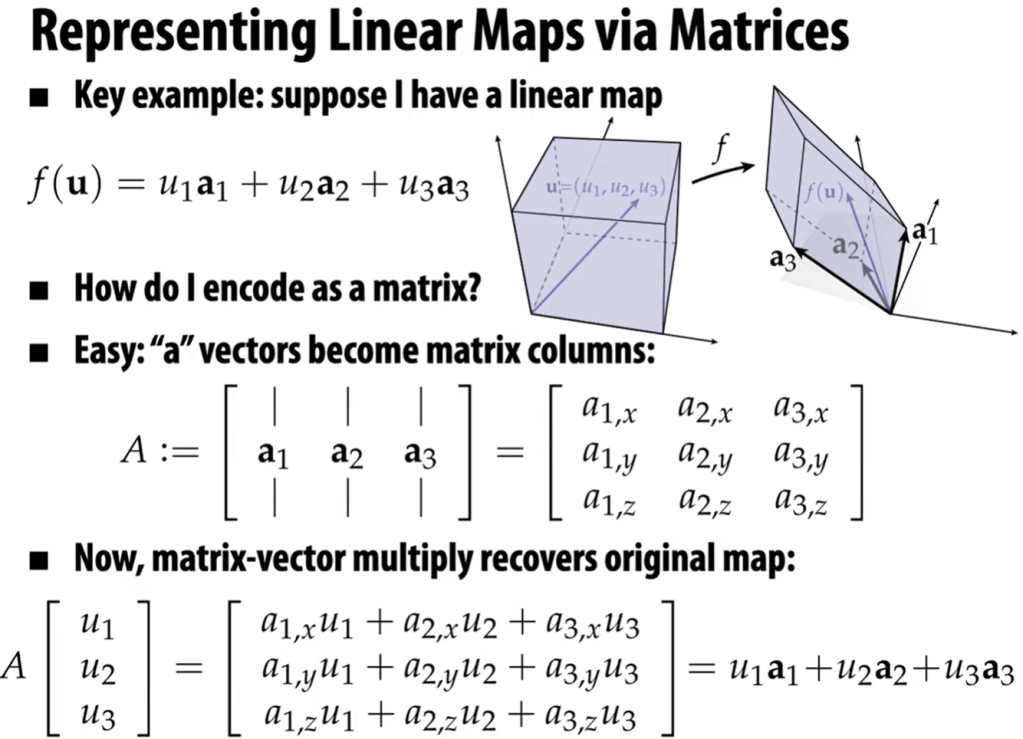
So apparently here you can determinant is the volume of three vector object. However, what is the determinant of a linear map/matrix? It boils down to our understanding of matrix first visually or geometrically as below:
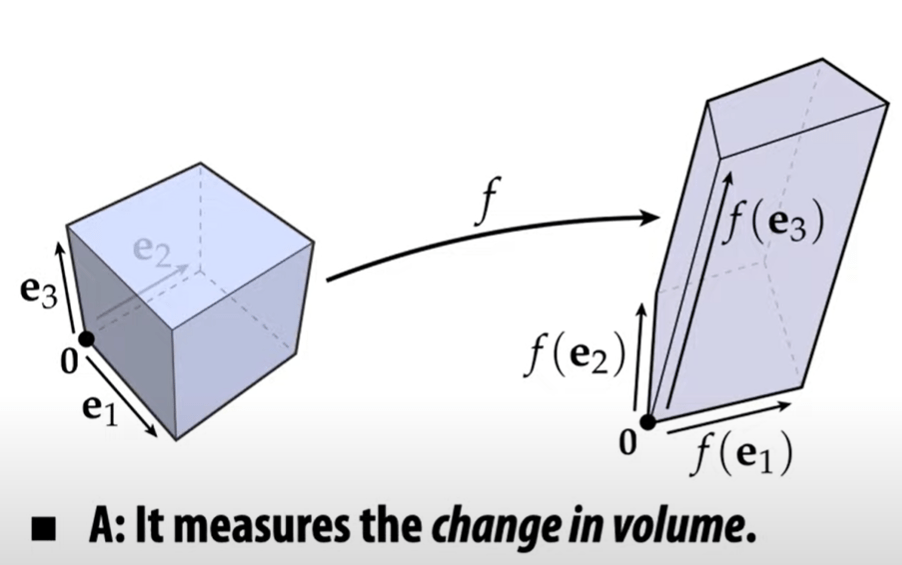
Hence, analogously, it’s transforming/mapping a change of volume. also note there is the sign matters here.
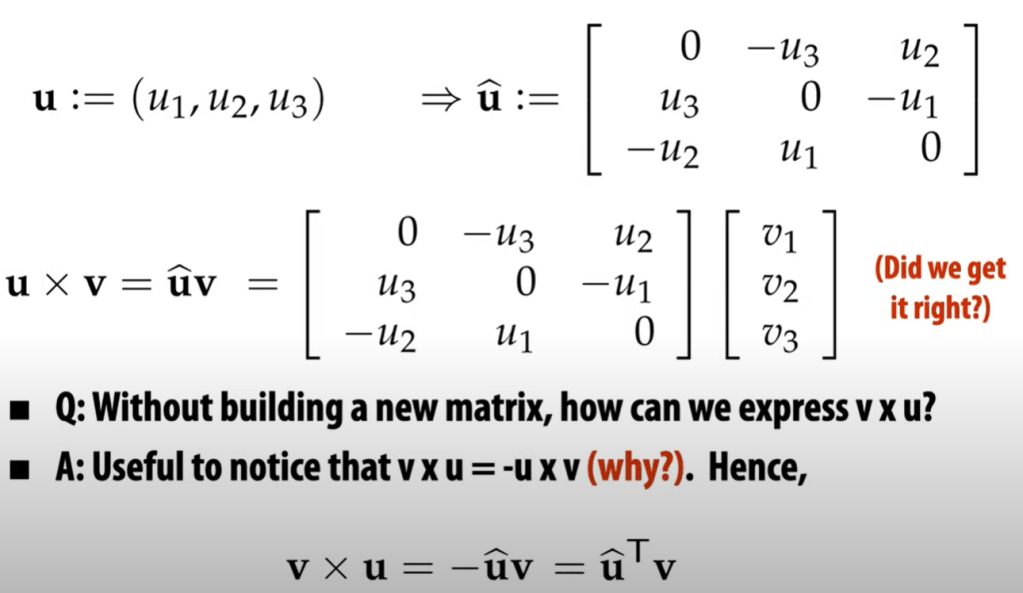
Matrix is a tool, a splendid math tool. Here is one example how it manifests itself in math.
- Represent dot product

- Represent cross product
 Naixian Zhang