While individual quantum measurements are probabilistic, the strength of quantum computing lies in its ability to process vast amounts of information simultaneously through superposition and entanglement, and to amplify certain outcomes so they can be detected with higher probability upon measurement. Here’s a breakdown of how quantum computers utilize these principles for meaningful computations:


It’s worth noting that not every computational problem benefits from quantum computing. Quantum computers show significant advantages for specific problems, like simulating quantum systems, optimizing complex systems, and certain cryptographic tasks. For many everyday tasks, classical computers are more efficient and practical. The challenge and promise of quantum computing lie in harnessing and controlling its unique properties for problems where it can offer a significant speedup or capability enhancement over classical methods.
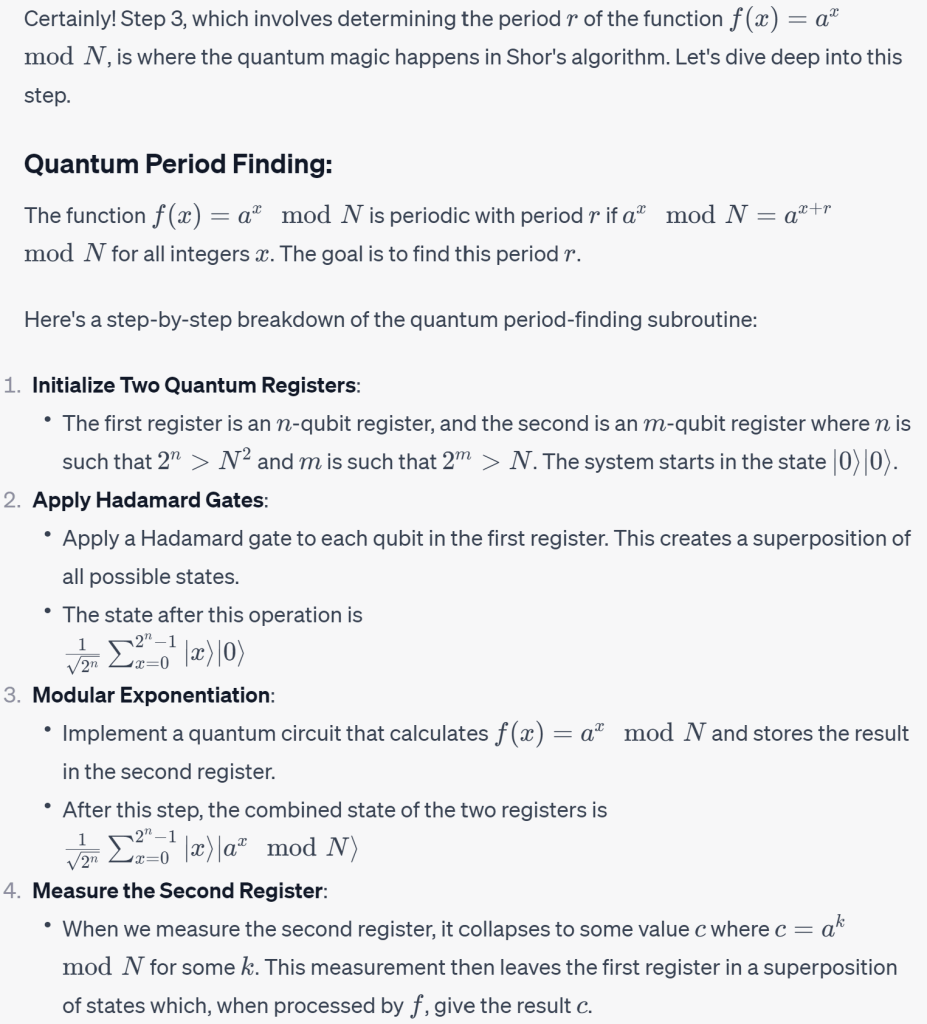
Shor’s algorithm is published in 1994 to find prime number for a composite number.
Shor’s algorithm:
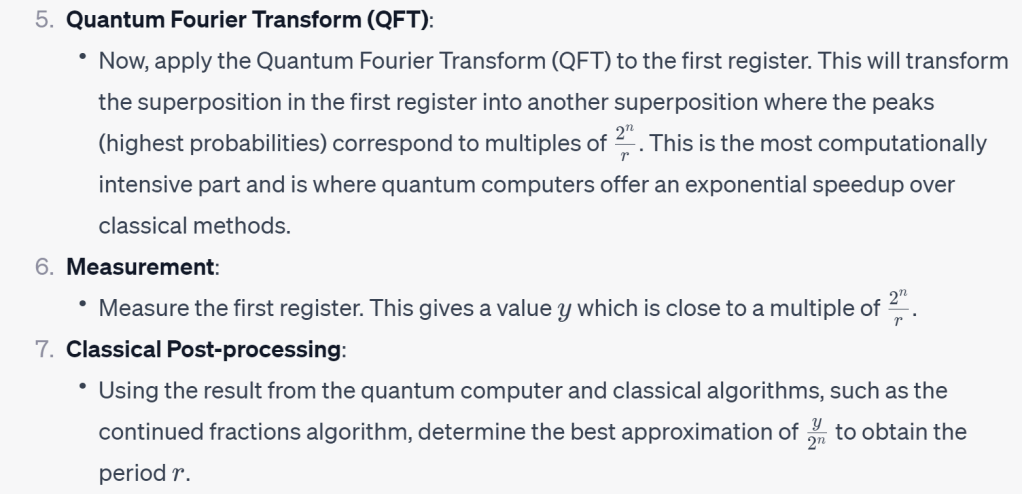
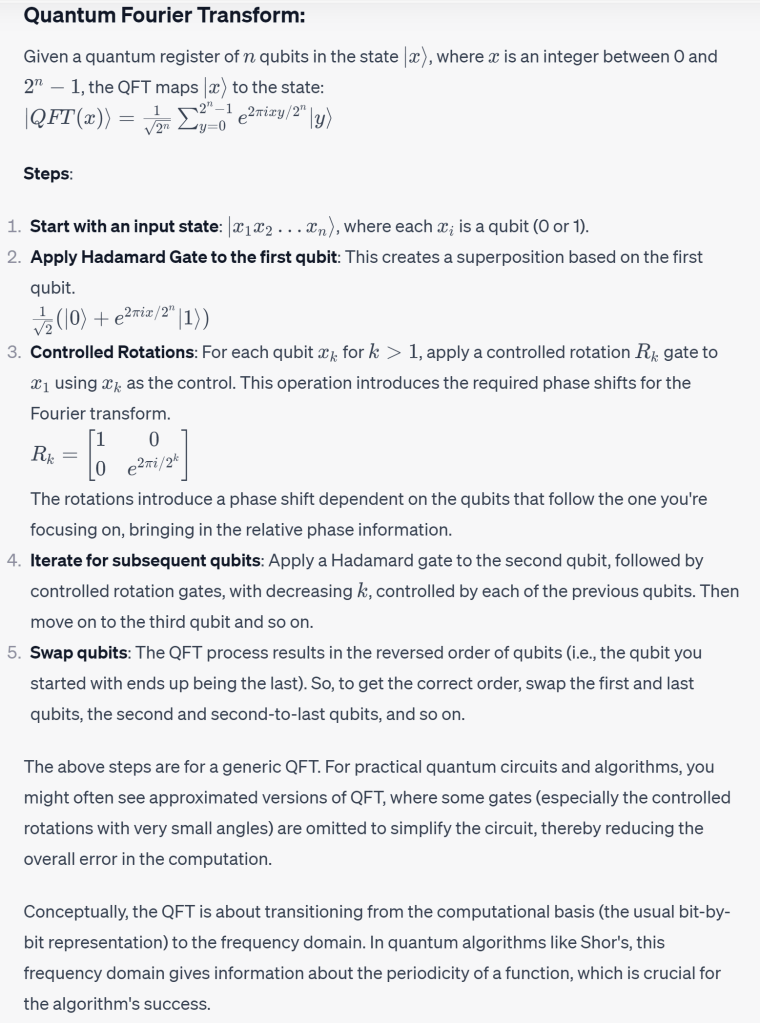
so how is QFT done?
 Naixian Zhang