According to Perplexity, Genesis and Isaac are both platforms designed for robotics and AI development, but they have distinct features and focus areas:
Genesis Platform
- Simulation Speed: Genesis can run simulations up to 43 million frames per second, which is 430,000 times faster than real-time7.
- Physics Engine: Integrates various state-of-the-art physics solvers into a unified framework, supporting a wide range of materials and physical phenomena1.
- Generative Capabilities: Can generate 3D interactive scenes and robotic policies from natural language descriptions17.
- Accessibility: Developed entirely in Python, making it accessible to researchers with standard programming skills7.
- Open-Source: Freely available for researchers and developers7.
Isaac Platform
Industry Adoption: Used by major companies like Siemens for industrial automation and robotics development9.
ROS Integration: Built on ROS 2, providing NVIDIA-accelerated libraries and AI models for robot development3.
Simulation Environment: Includes Isaac Sim, built on NVIDIA Omniverse for designing, testing, and training AI-based robots9.
Specialized Workflows: Offers specific workflows like Isaac Manipulator for robotic arms and Isaac Perceptor for autonomous mobile robots6.
Hardware Acceleration: Leverages NVIDIA GPUs and Jetson platforms for accelerated performance12.
Genesis focuses on ultra-fast simulations and generative AI capabilities, while Isaac provides a more comprehensive ecosystem with hardware acceleration and industry-specific solutions. Genesis appears to be more accessible to researchers, while Isaac is geared towards industrial applications and integration with NVIDIA’s hardware ecosystem.
At this page, it showcase how astounding this genesis platform can offer:
- Generating 4D dynamical & physical world
- Character Motion Generation
- Robotic Policy Generation
- More Sim2Real Policy Transfer
- 3D & Fully Interactive Scene Generation
- Open-world Articulated Object Generation
- Soft Robot
- Speech Audio, Facial Animation & Emotion Generation


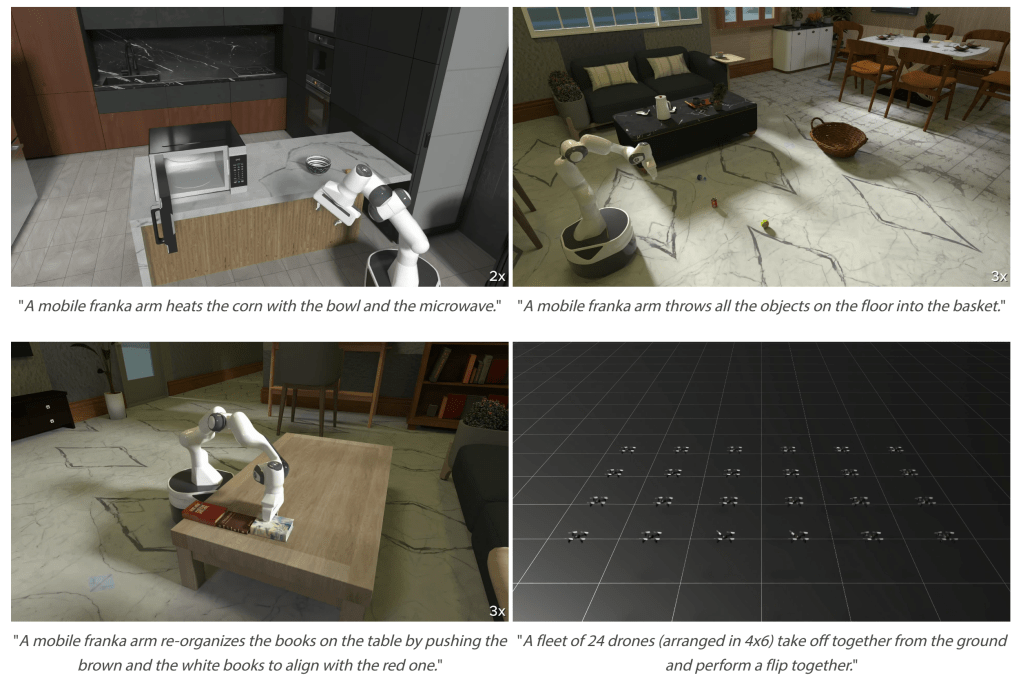
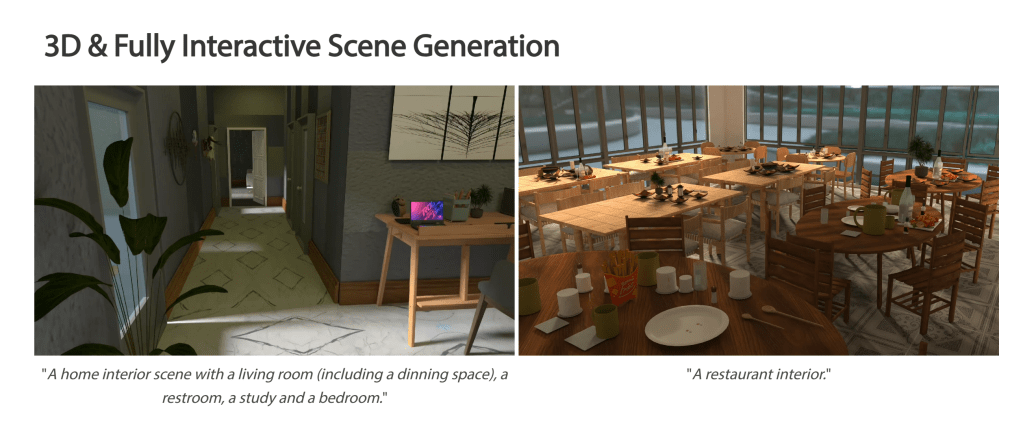
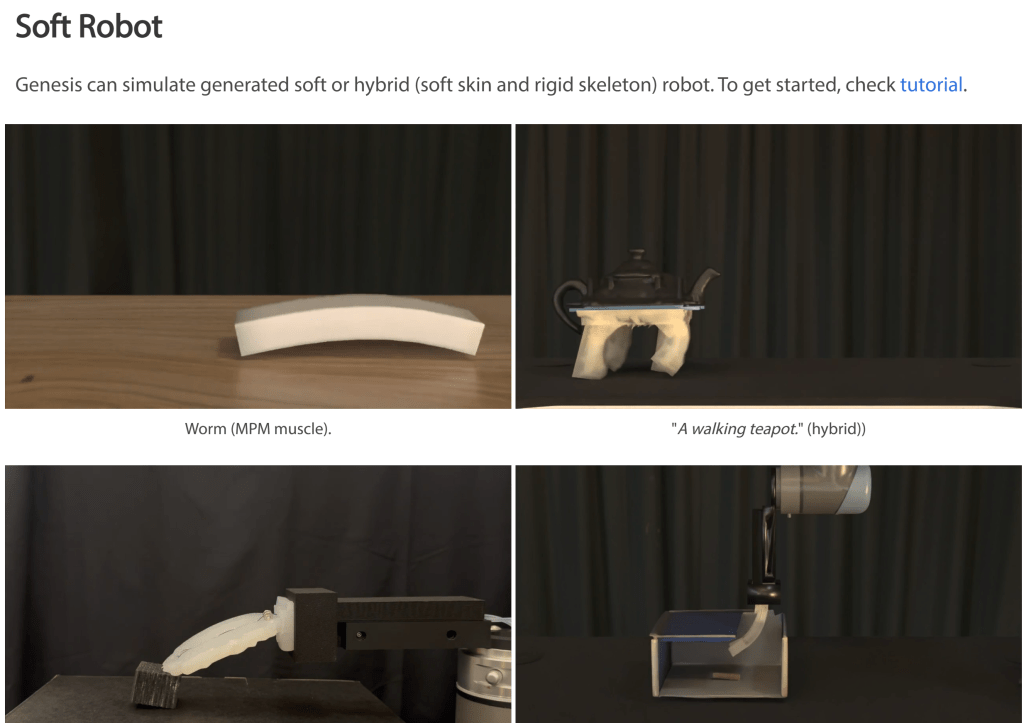
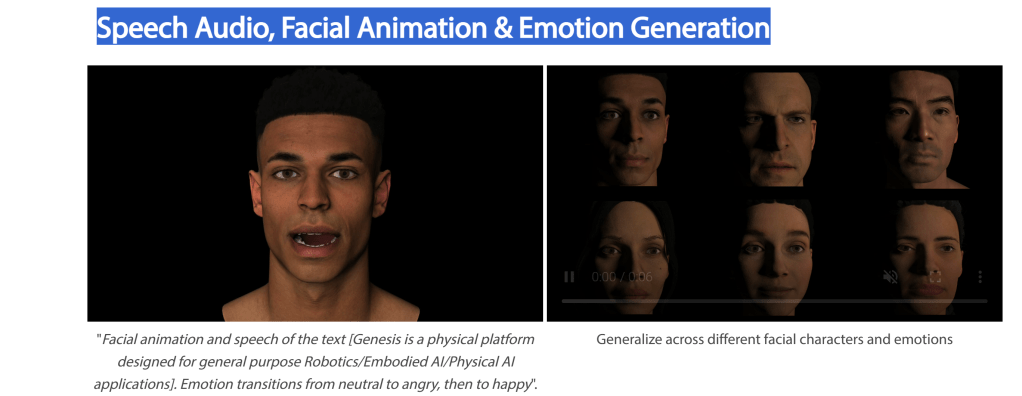
Genesis achieves its remarkable simulation speed through several key factors:
- GPU Acceleration: The platform leverages GPU-accelerated parallel processing, utilizing the power of modern graphics cards like the RTX 409014.
- Optimized Physics Engine: Genesis combines multiple state-of-the-art physics solvers into a unified framework, optimized for performance3.
- Parallel Computation: The system employs parallelized simulation techniques, allowing for massive speedups compared to sequential processing3.
- Efficient Programming: Despite being developed in Python, Genesis uses highly optimized GPU-based physics and graphics engines2.
- Batch Processing: By using large batch sizes (e.g., 30,000), Genesis can process multiple simulations simultaneously, greatly increasing overall throughput2.
- Simplified Simulations: When running at maximum speed, Genesis likely reduces the complexity of simulations and turns off graphical rendering to focus purely on physics calculations2.
Following this documentation page to install and play around, that will be written in my next blog.
ROS and NVIDIA’s platforms offer comprehensive tools for the entire development lifecycle, including hardware integration, perception, planning, and control.
Therefore, Genesis serves as a powerful simulation tool that can complement existing platforms like ROS and NVIDIA’s Isaac. However, it does not replace the comprehensive functionalities provided by ROS or NVIDIA’s platforms in real-world robotics applications.
 Naixian Zhang